

< “Indie Game”; “Unreal Engine 5” >
// In this third-person action-adventure platformer for PC and Steam Deck, play as Kila, a Keeper of Time, and use time-based chrono abilities to restore Aion to its original glory.
< Kila: Hourbound >
My Role = Technical Level Designer
Engine = Unreal Engine 5
Team Size = 26
Development Time = 28 weeks
Platform = PC, Steam Deck
Average Playtime = 80 minutes
< My Role & Scope >
In Kila: Hourbound, I served as Technical Level Designer, responsible for designing puzzle-centric and platforming levels and implementing gameplay logic using Unreal Blueprints.
I collaborated with programmers and artists to streamline the asset production pipeline, build scenes, refine gameplay pacing, and optimize performance.
I independently designed and built Level 3, contributed significantly to roughly half of the playable levels, implemented logic for four puzzle prototypes, and created over ten modular kit prefabs.
< Level Design Goals >
The core gameplay of Kila: Hourbound focuses on platforming and time management.
In each level, players must complete objectives within a limited time, where time acts as both health and a vital gameplay resource.
Defeating enemies and collecting pickups grant additional time, while activating powerful abilities may cost time, creating tension between risk and reward.
< Level 1 Design Features>
Overview
The primary goal of Level 1 is to introduce players to Kila: Hourbound by establishing a clear understanding of core gameplay mechanics before adding complexity.
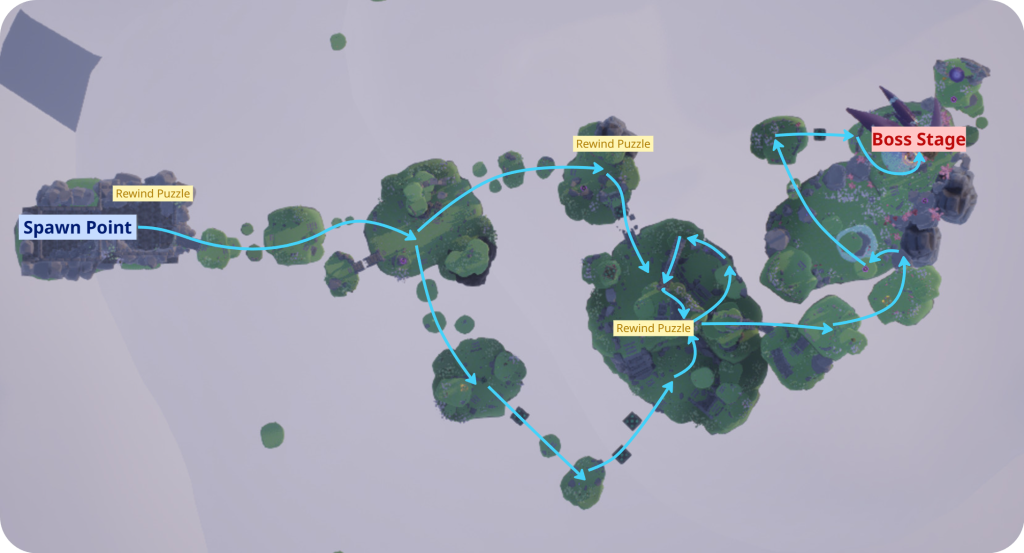
By the end of Level 1, players should be able to:
- Confidently perform basic traversal (running, jumping, navigation)
- Execute basic melee combat against standard enemies
- Understand Rewind as a puzzle-solving tool
< New Mechanics >
Puzzle: Rewind-Focused Puzzle Design
The rewind puzzle in Level 1 is designed to illustrate cause-and-effect relationships and introduce the core usage of the Rewind mechanic. In the example shown in the GIF, the player is blocked by a barrier gate that cannot be passed directly. In front of the gate sits an hourglass, which functions as a “lock,” while a key is placed a short distance away.
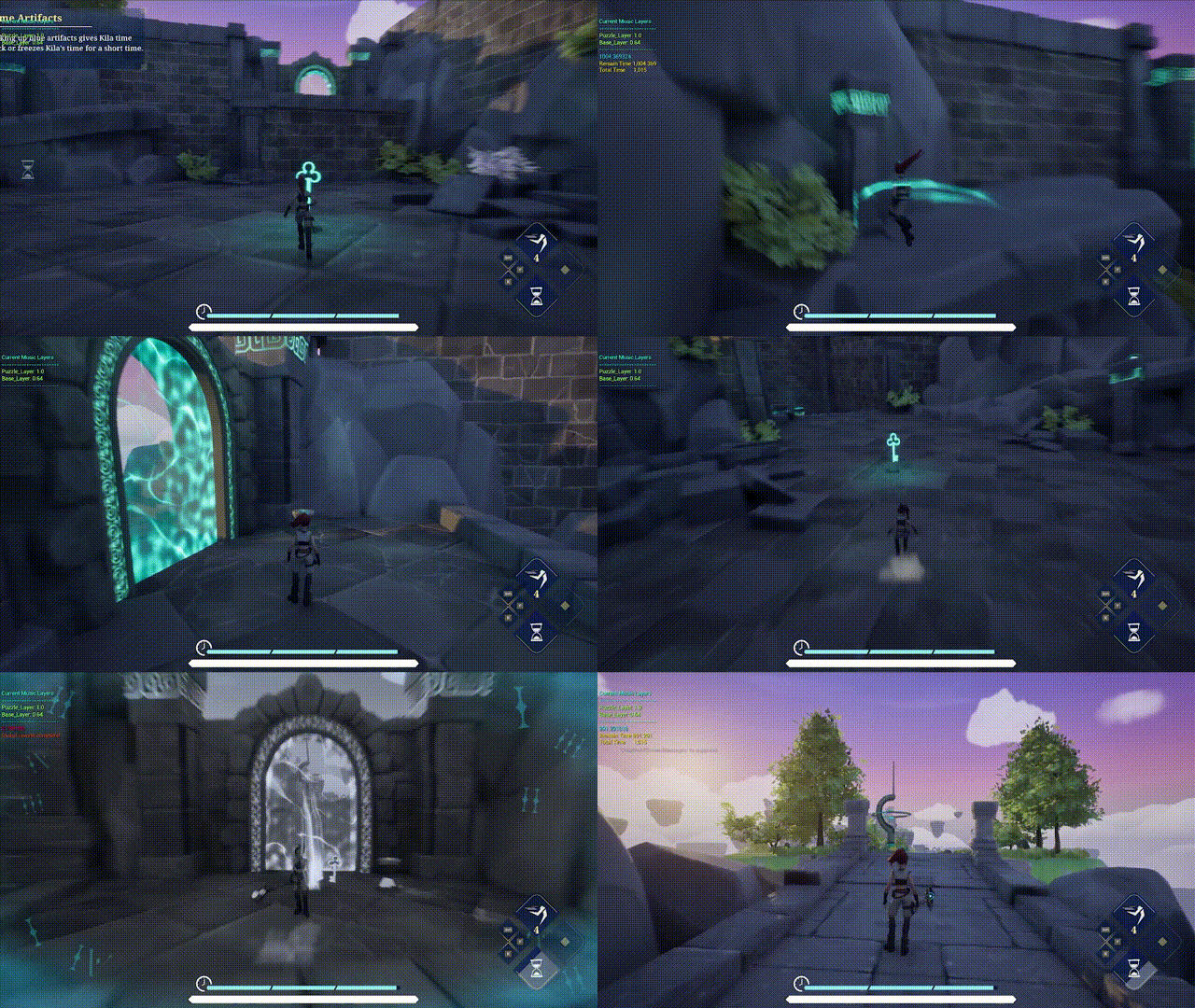
To remove the barrier, the player must insert the key into the hourglass. However, once picked up, the key disappears after a few seconds. If players follow the conventional path (red line in diagram) and carry the key toward the hourglass, the key expires before reaching the gate, causing failure.
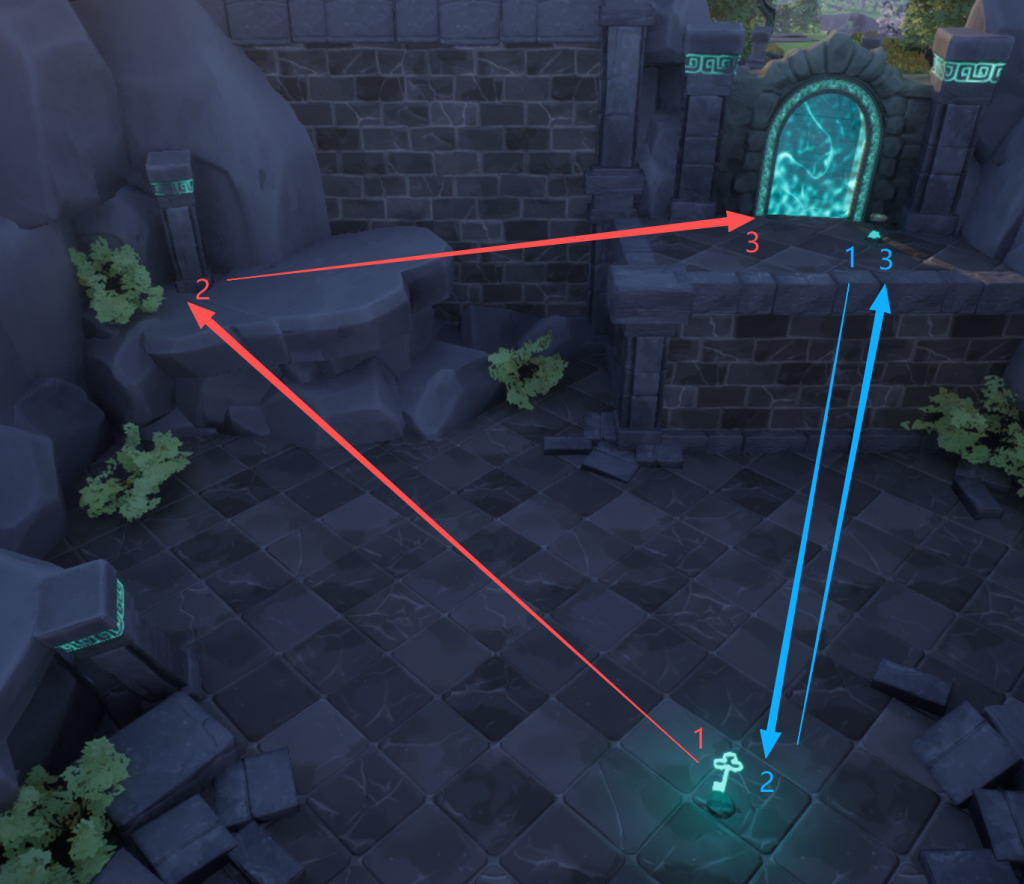
To solve the puzzle, players must use the Rewind ability and plan movements in reverse. The intended solution is to first travel to the destination (blue position 1), then move back to collect the key (blue position 2), and immediately activate Rewind to return to the destination (blue position 3). This allows the player to reach the hourglass before the key disappears.
This setup demonstrates how time reversal can alter spatial logic and causal relationships.
Puzzle: Moving Platform
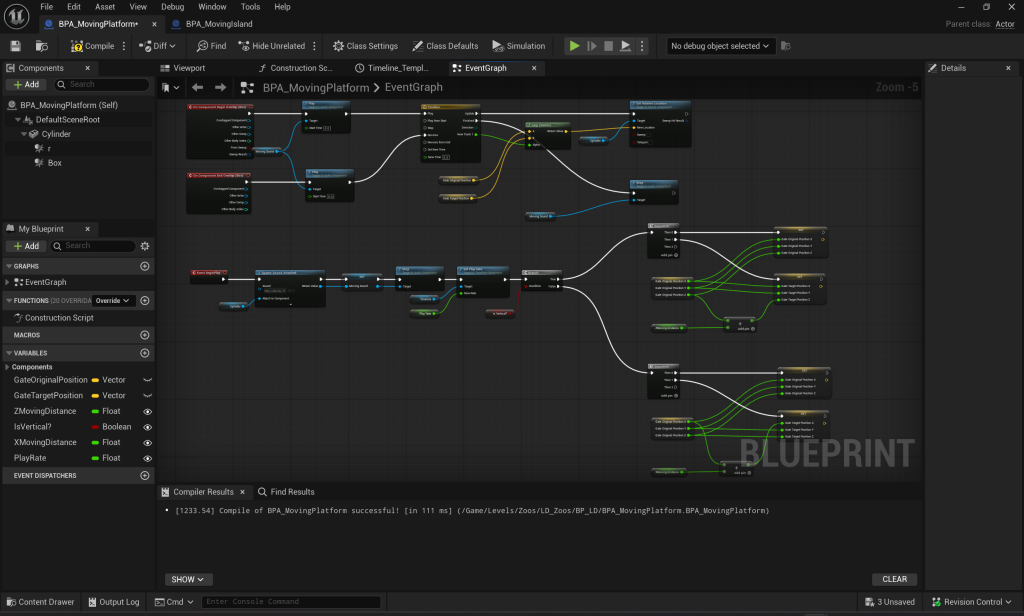
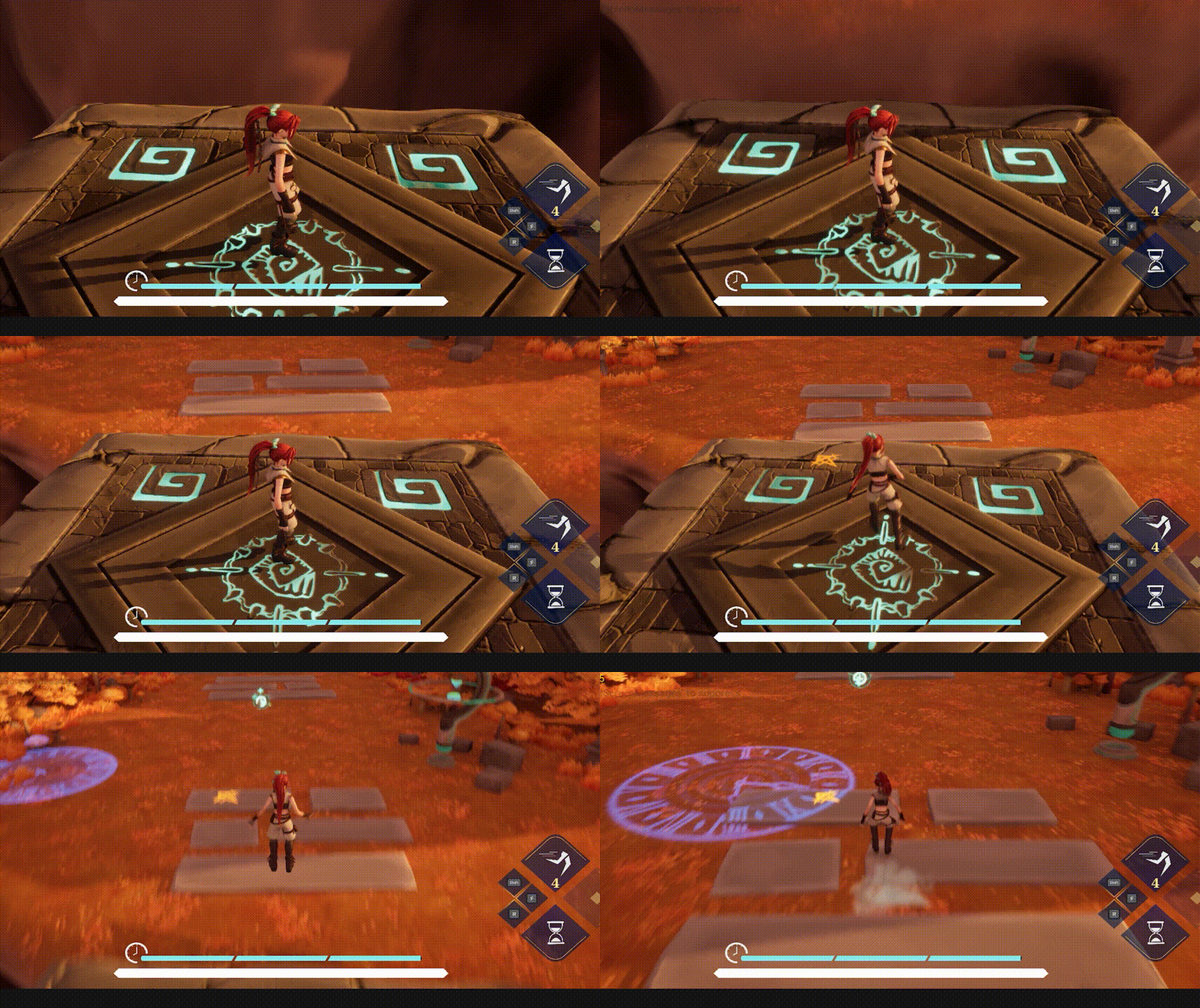
The moving platform is an interactive traversal element designed for rapid player movement, functioning similarly to an elevator. Its parameters are fully exposed in Blueprint, allowing vertical and horizontal movement with adjustable speed to support varied spatial layouts and pacing.
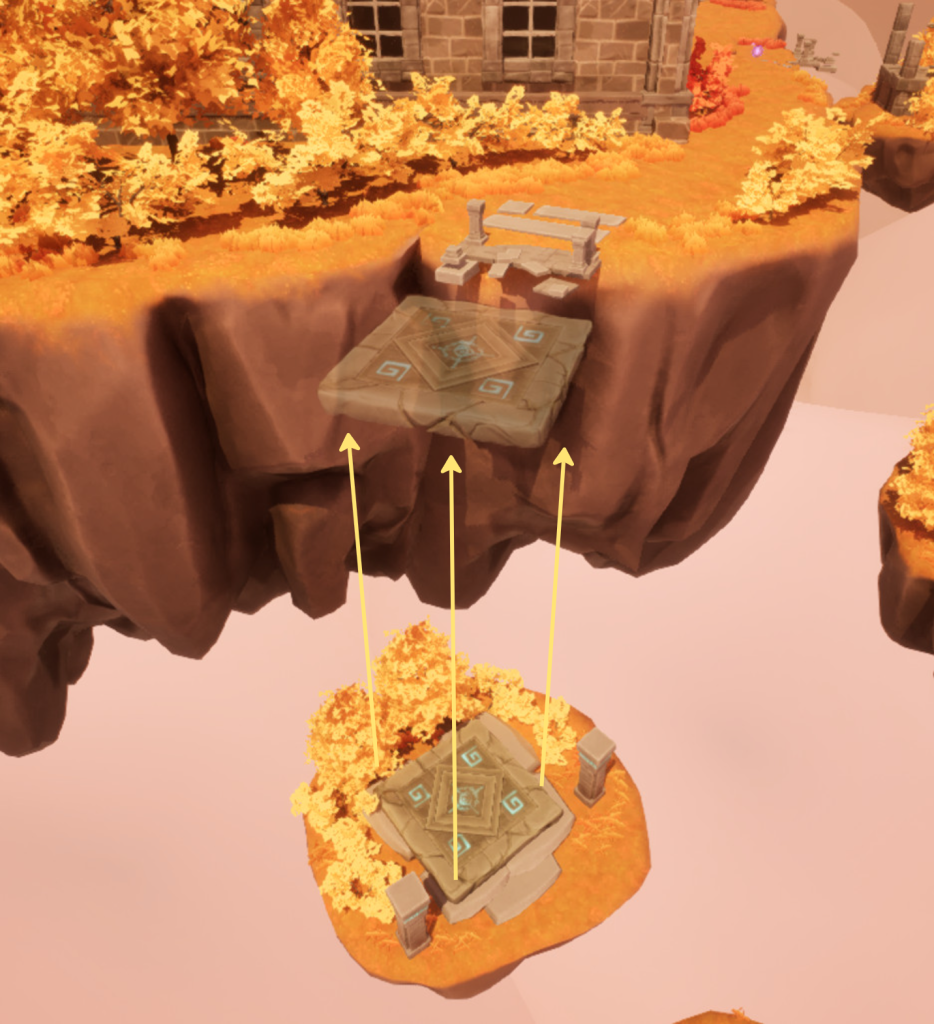
This element is mainly deployed along return paths, in high-vertical spaces, and as a geographic gate to shape navigation flow. It is used to better control player flow while preventing bad backtracking through intentional route design.
< Level 3 Design Features >
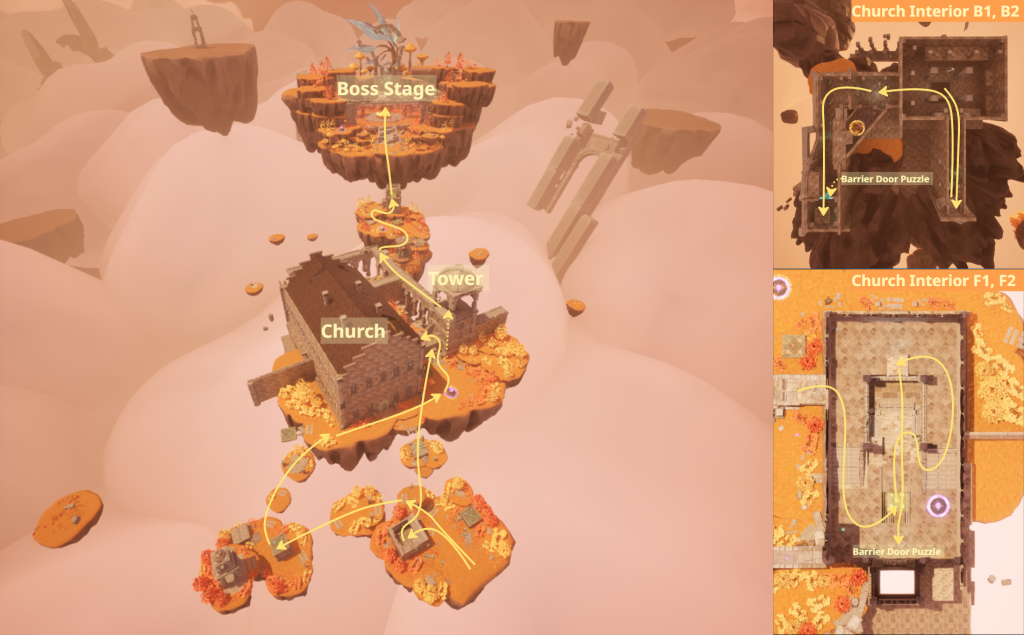
Level 3 combines indoor and outdoor spaces, builds on previously introduced mechanics, and expands them.
New mechanic: Barrier Gate Variants
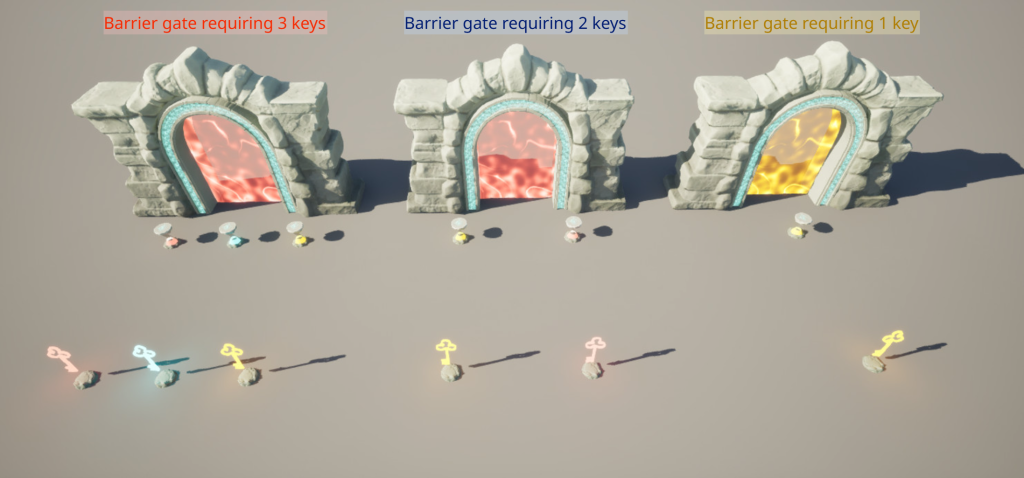
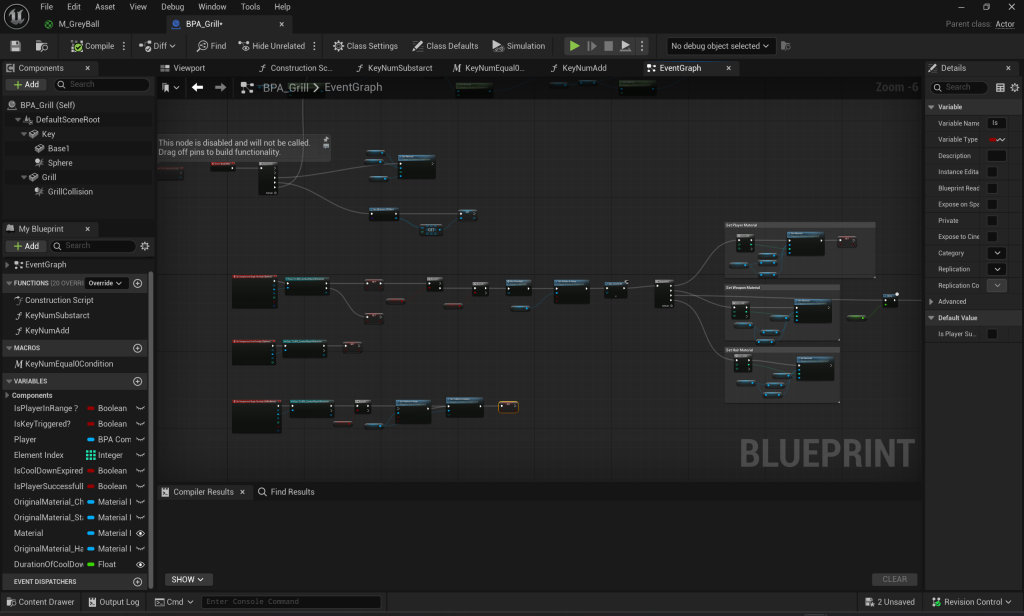
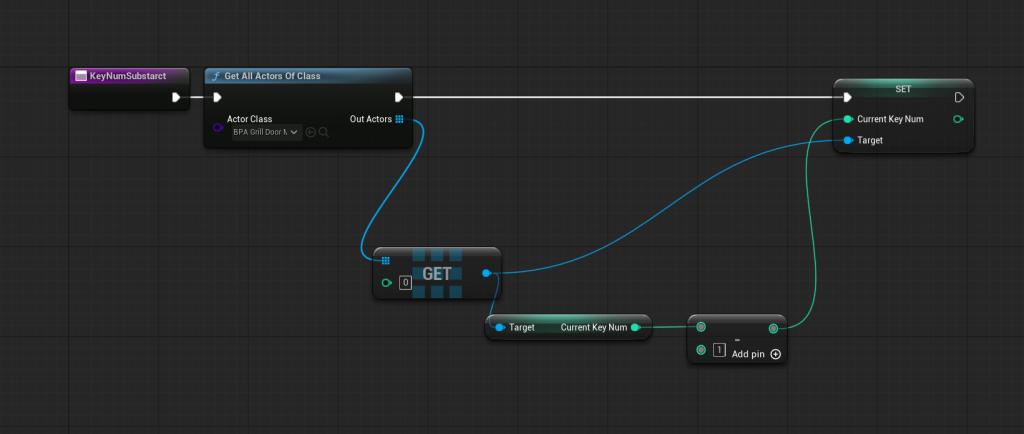
Level 3 features multiple Barrier Gate variants that require more complex conditions to unlock. For example, some gates demand two or even three keys.
Players must locate keys using color clues. Because only one key can be carried at a time and each has a limited lifespan, careful route planning is required.
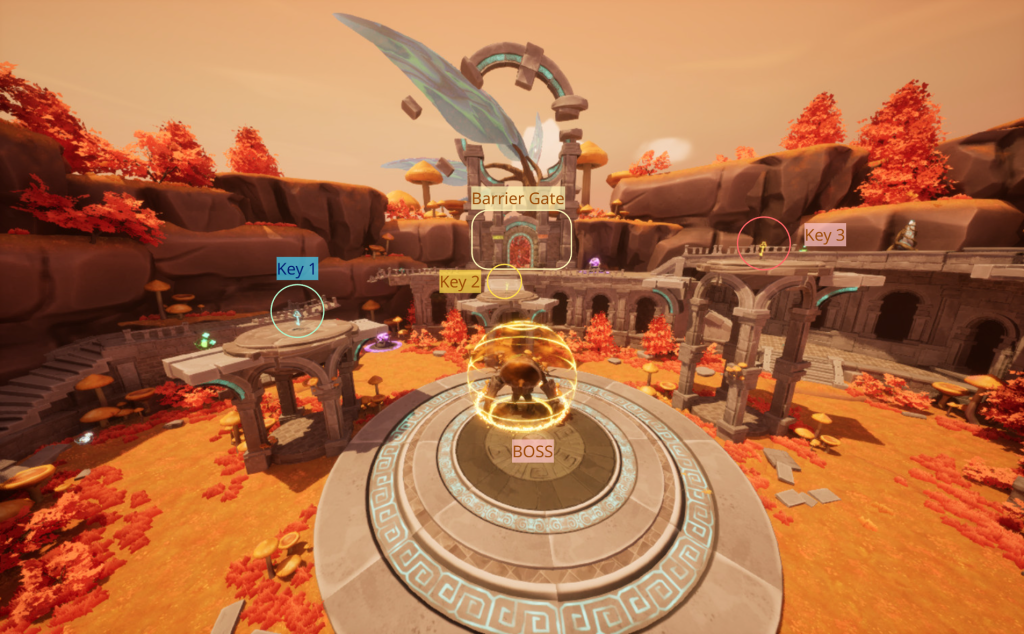
Challenge: Boss Stage
The Level 3 boss stage integrates all previously introduced mechanics.
The boss is protected by a shield, which must be destroyed before the boss can be defeated. This shield is powered by three Shield Nodes, and players can destroy them in any order.
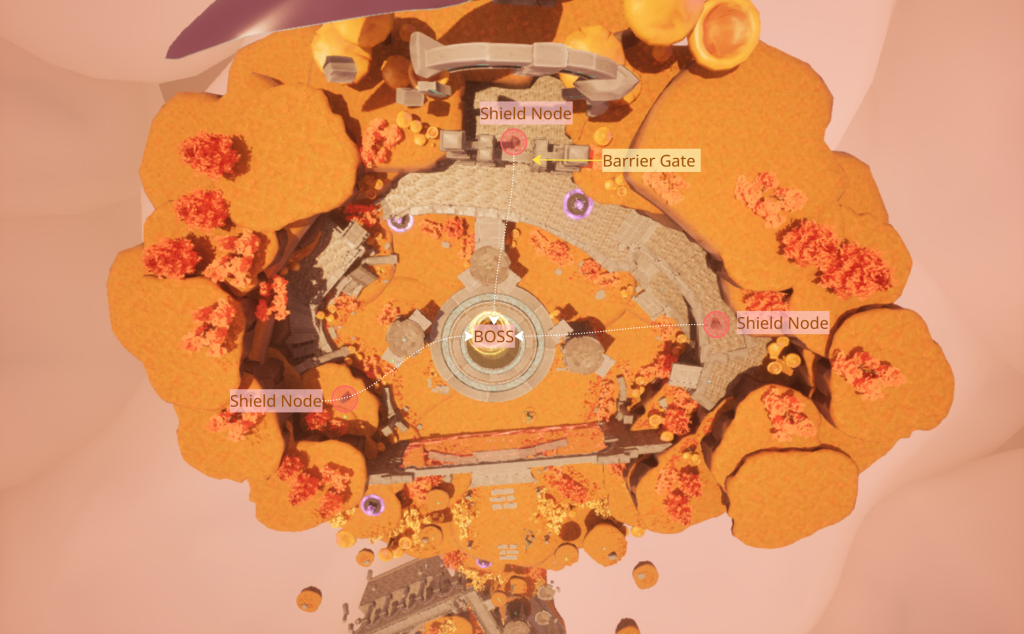
Two Shield Nodes are easy to reach; the third is hidden behind a barrier gate.
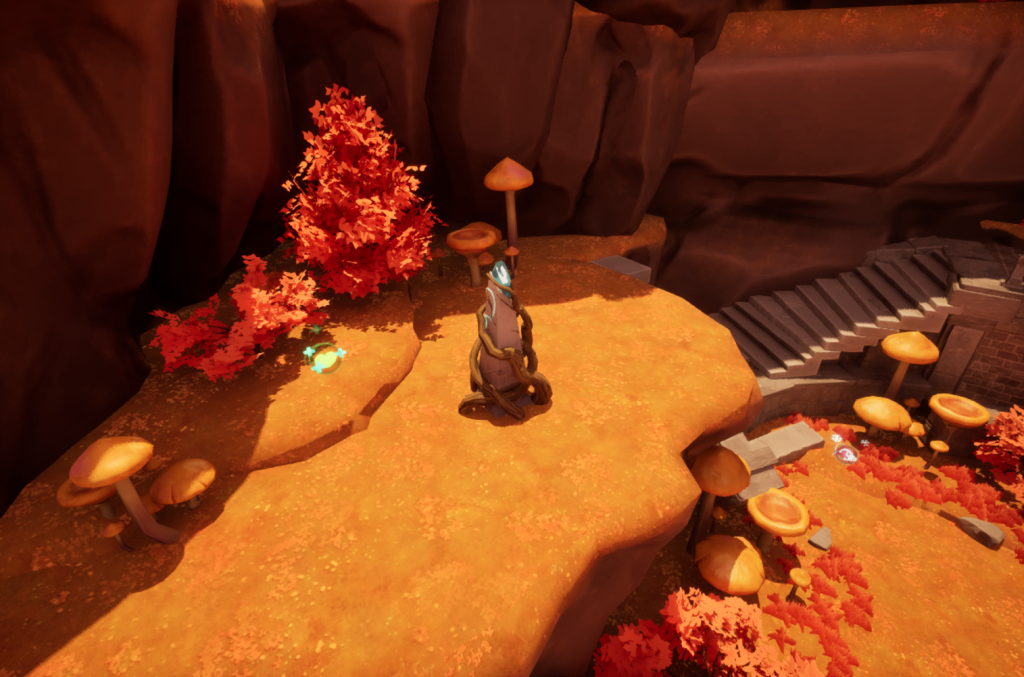
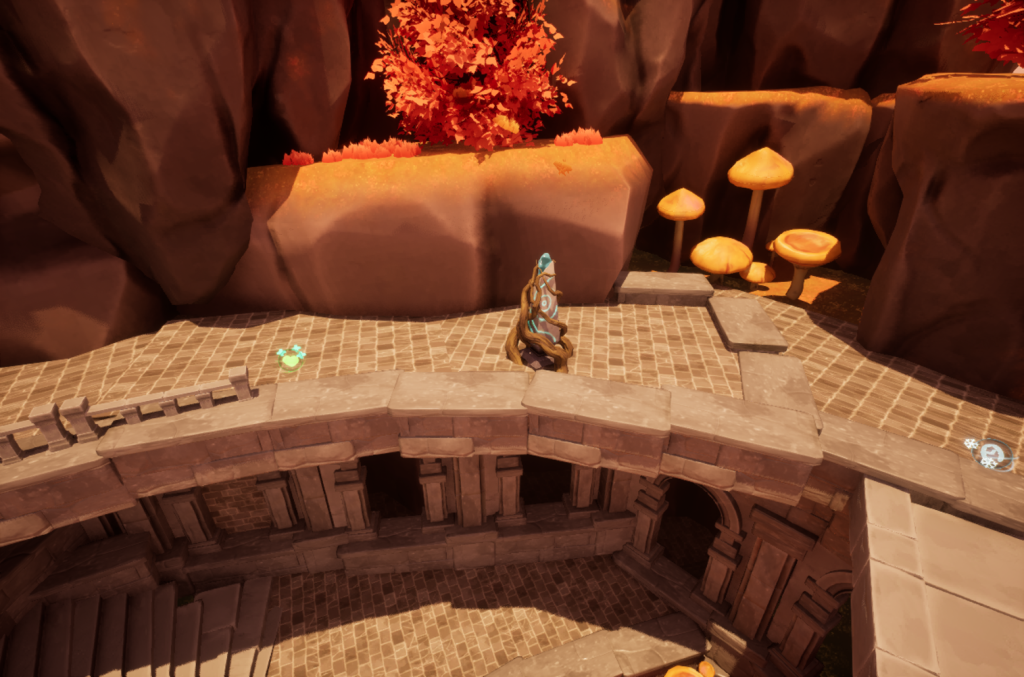
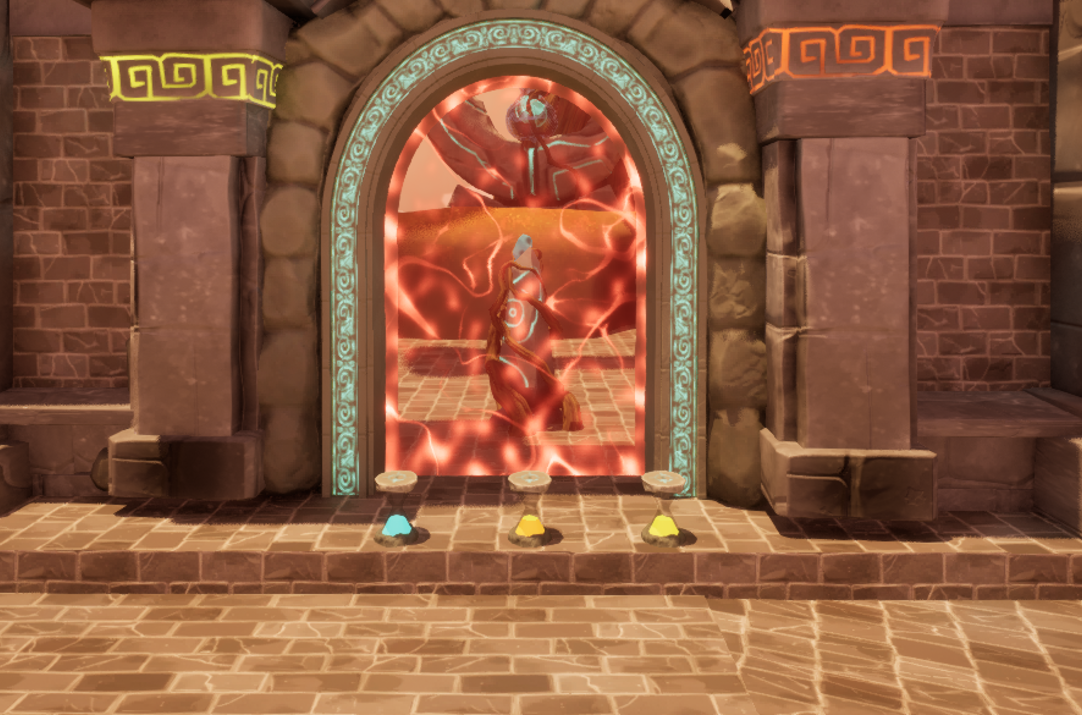
To access this more challenging Shield Node, players must locate three keys to unlock the Barrier Gate, reinforcing the puzzle mechanics established earlier in the game.